Visits by appointment
Global shipping
Get our newsletter
Here 5 stars for our visitors! You will find the good reviews about our shop here, but they can be found online overall. We really appreciate the opportunity to drive it. What a celebration, so that every day is filled with positive reports and pleasant meetings. The convenience online and in the store makes it particularly pleasant for us as a team to do so. We fully enjoy the shop and are confident that this will always be possible thanks to the sellers who will give us the opportunity to purchase the items we have available. Thanks everyone!
Google reviews |
<!---->

Google | 4.9

Highly addictive!

Packed with new and used HiFi.

According to reliable source (ourselves) the coolest audio store in the universe.

We always offer a full 12-month warranty on used products.
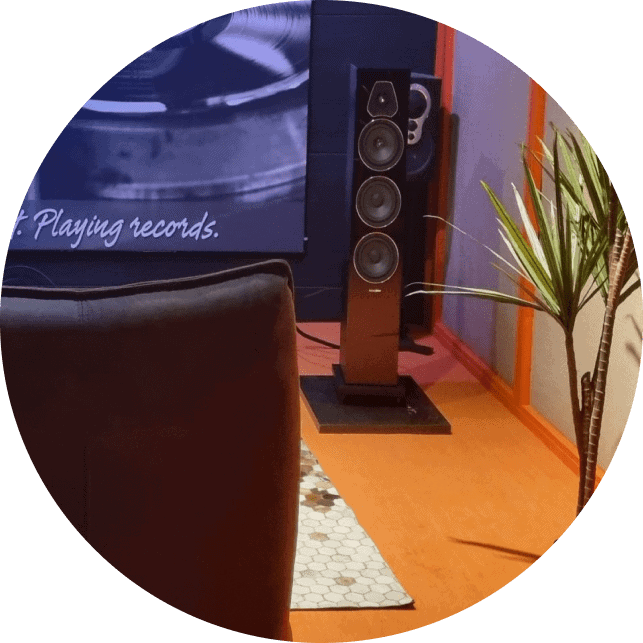
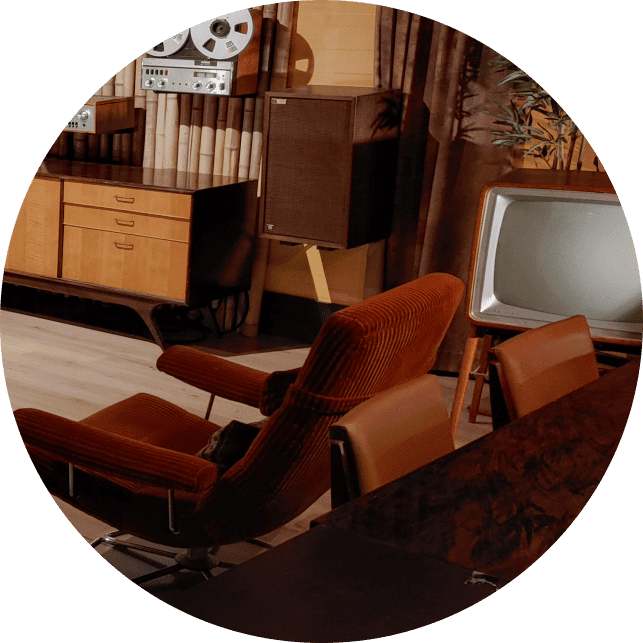
Make an appointment for a comparative listening session in one of our relaxed listening rooms!

Welcome

to Freakuence!

Enter

at your own risk...

Yummy photos!

new or used

always tasty

Visit our brand page!

new audio | used audio

We love it all!

Listening sessions

for the fanatic

and the explorer

The Freakcons!

Our audio icons. Just click…

Know your history!

With pleasure

new or used

good warranty

Freak filter

Price

Euro
Euro

Buizenversterker

Weer heeft die Edison er iets mee te maken! In 1883 nam hij een blauwe gloed waar in een gloeilamp, welke hij had voorzien van een metalen draad om de zwarte aanslag op het glas, veroorzaakt door het opbranden van de koolstofdraad te voorkomen. De Engelse natuurkundige Joseph John Thomson wist in 1897 te achterhalen dat de gloed het resultaat was van minuscule deeltjes met een negatieve lading, hij had hiermee het elektron ontdekt. Begin jaren 1900 begon Professor John Ambrose Fleming de blauwe gloed te onderzoeken. De draad van Edison verving hij door een metalen plaat en toen ontdekte hij dat de elektronen alleen naar de plaat toe bewogen indien deze positief geladen waren. Hij kon dus wisselstroom omzetten in een gelijkstroom, zijn octrooi stamt van 1904. De Amerikaan Lee De Forest voegde er in 1906 een rooster aan toe en vond hiermee de triode uit. Met dit stuurrooster kon hij de stroom elektronen tussen de twee elektrodes versterken of verzwakken, de versterkerbuis was geboren. En wij genieten meer dan een eeuw later dagelijks van deze bijzondere uitvinding.

Minidisc

In 1992 kwam Sony met de Minidisc, de tijd van casettes was voorbij vonden ze daar maar de wereld dacht er anders over. De Nederlanders waren naast de Japanners pioniers in het gebruik ervan, toch waren er maar weinig die hun discman of vaste cd-speler ervoor aan de kant legden. Vooral de fanatieke ‘opnemers’ hadden een collectie van de kleine schijfjes. Toen in 1998 de eerste mp3-speler op de markt verscheen werd het met de jaren duidelijk dat zowel de cd als de minidisc flink zou moeten inboeten. Toen onze it-developer zijn mp3-speler in het jaar 2000 als een echte gadgetfreak toonde moesten we als vriendengroep hard lachen, hij beweerde dat dit de toekomst zou zijn terwijl er niet eens een heel album oppaste.

8-track

In 1964 kwam de 8-track op de markt. Yeah! Deze was voorzien van een magneetband met 8 sporen en dus vier stereo-opnames parallel op één band. Hierdoor kon je lekker vlot skippen tussen de tracks. Vooral in auto’s werd er volop naar geluisterd. Door de wrijving op de spoel is de snelheid niet erg constant… maar ach, dat was die van de automobiel van toen ook niet. Volume omhoog, gaspedaal naar beneden! Begin jaren 70 was het gedaan met de 8-track, hij werd verdrongen voor de kleinere en betere casette. De 8-track hebben wij nooit gehoord maar zien doen we ze hier dagelijks.
Emile Berliner kwam in 1887 met de eerste grammofoonplaat en gelukkig ook met de grammofoon waardoor het niet stil hoefde te blijven. De cilindervormige fonograafrol van Edison werd vervangen door de platte plaat, deze plaat werd ook voorzien van groeven zoals bij de wasrol maar nu in spiraalvorm zodat de geluidsgolven niet meer verticaal maar horizontaal in het zogenoemde Berlinerschrift werden geregistreerd. Tijdens het opnemen voorzag hij een glasplaat van een laagje roet, waar de trillingen in werden gedrukt. Daar maakte hij een metalen kopie van, waarover de stalen naald loopt. Deze naaldweergever zit aan een arm met spoel, met daaraan als versterker een grote hoorn voor de geluidsweergave. Later kwam hij met verbeteringen voor deze 78 toeren-plaat, met uiteindelijk de zeer breekbare schellak-platen. Nooit gehoord hoe dit klinkt? Vraag erom! We hebben een exemplaar staan.

Schrijf je in!

audiofeiten | producten | luisterervaringen | muziek

Schrijf je in!

audiofeiten | producten | luisterervaringen | muziek

Exclamation point

We are Freakuence!

Your daily scroll!

This is where you are right audio fanatic. Packed with products. Daily entertainment. Go wild on our website!

This is where you are right audio fanatic.
Packed with products & daily entertainment.
Go wild on our website!

Products
New and used gear. Check reviews, videos, brand history and more.

Freakboard!
Always something to discover.
Live shows, playlists, setups, sessions, tips and nonsense.
Open the Freakboard!

Listening rooms
They drag you into other worlds. Time blurs. See them now, experience them later.

Freaknews!
Go to the Freakboard! and sign up for our newsletter. No Fake News, Audio Only!

Brands page
Toss a coin in the jukebox and discover our brands.

Freakcons!
These audio icons can be found throughout the site. Click and discover the audio history.

Information page
For those who really want to know everything about Freakuence!

Sign up!

audio facts | products | listening experiences | music

Sign up!

audio facts | products | listening experiences | music

Tube amplifier

Once again Edison has something to do with it! In 1883 he observed a blue glow in an incandescent lamp, which he had fitted with a metal wire to prevent the black deposits on the glass caused by the burning of the carbon wire. The English physicist Joseph John Thomson discovered in 1897 that the glow was the result of tiny particles with a negative charge, thus discovering the electron. In the early 1900s, Professor John Ambrose Fleming began investigating the blue glow. He replaced Edison’s wire with a metal plate and then discovered that the electrons only moved towards the plate if it was positively charged. He was therefore able to convert alternating current into direct current, his patent dates from 1904. The American Lee De Forest added a grid in 1906 and invented the triode. With this control grid he could amplify or weaken the flow of electrons between the two electrodes, the amplifier tube was born. And more than a century later, we enjoy this special invention every day.

Minidisc

In 1992 Sony introduced the Minidisc, the time of cassettes was over, they thought, but the world thought differently. The Dutch, alongside the Japanese, were pioneers in its use, yet few put aside their discman or regular CD player for it. Especially the fanatical ‘recorders’ had a collection of the small discs. Especially the fanatical ‘recorders’ had a collection of the small discs. When our IT developer showed off his MP3 player in 2000 like a real gadget freak, we laughed out loud as a group of friends, he claimed that this would be the future while it wouldn’t even hold an entire album.

8-track

In 1964 the 8-track came onto the market. Yeah! This was equipped with a magnetic tape with 8 tracks and therefore four stereo recordings in parallel on one tape. This allowed you to skip between the tracks nice and smoothly. It was listened to a lot, especially in cars. Due to the friction on the spool, the speed is not very constant… but hey, that wasn’t the case with the automobile of that time either. Volume up, throttle down! In the early 1970s the 8-track was over and replaced by the smaller and better cassette. We have never heard the 8-track, but we see it here every day.
Emile Berliner came up with the first gramophone record in 1887 and fortunately also the gramophone, so there was no need to remain silent. Edison’s cylindrical phonograph roll was replaced by the flat plate, this plate was also provided with grooves like the wax roll, but now in a spiral shape so that the sound waves were no longer recorded vertically but horizontally in the so-called Berlinerschrift. While recording, he coated a glass plate with a layer of soot into which the vibrations were pressed. He made a metal copy of it, over which the steel needle runs. This needle reproducer is attached to an arm with a coil, with a large horn attached to it as an amplifier for sound reproduction. Later he came up with improvements for this 78 rpm record, eventually resulting in the very fragile shellac records. Never heard what this sounds like? Ask for it! We’ve got one at the store.

CD

De Compact Disc (CD) kwam zoals de meeste uitvindingen niet uit de lucht vallen. Na de uitvinding van de laser in 1958 werd in 1961 het eerste octrooi voor optisch leesbare schijven ingediend. In 1972 werden de eerste digitale videoplaten geïntroduceerd. Na een flop van Philips kwam de fabrikant in 1979 samen met Sony met de eerste cd, wat erop stond weten wij niet maar in 1982 kwam de eerste cd voor de markt uit, het was het album Visitors van ABBA. In dit jaar kwam de eerste speler beschikbaar en zo begon de verdrijving van de lp uit de markt. Velen hebben hun lp’s letterlijk bij het vuil gezet… sommige bezoekers zien wij nog steeds balen als ze dit vertellen. Heb je cd’s, geniet er vooral nog eens van, ze hebben immers geen oneindige levensduur.

CD

The Compact Disc (CD), like most inventions, did not appear out of thin air. After the invention of the laser in 1958, the first patent for optically readable disks was filed in 1961. The first digital video records were introduced in 1972. After a flop by Philips, the manufacturer, together with Sony, released the first CD in 1979. We do not know what it contained, but in 1982 the first CD was released for the market, it was the album Visitors by ABBA. In this year the first player became available and so began the elimination of the LP from the market. Many have literally thrown their LPs in the trash… we still see some visitors being disappointed when they tell us this. Velen hebben hun lp’s letterlijk bij het vuil gezet… sommige bezoekers zien wij nog steeds balen als ze dit vertellen.